🚚 Free Worldwide Shipping on All Orders!Shop Now

$40.00
Scarf Organic Cotton Damien and Yilpi Marks DYM931 - Better World Arts—
$40.00
The Story
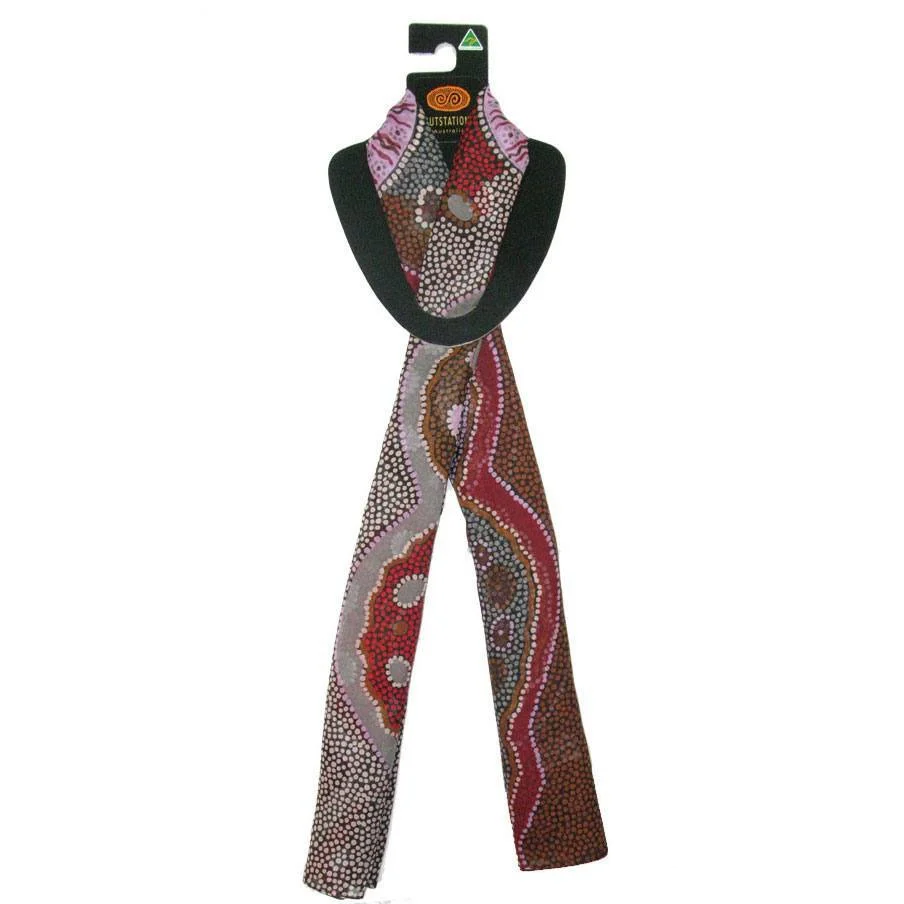
Organic Cotton Scarf-DYM931
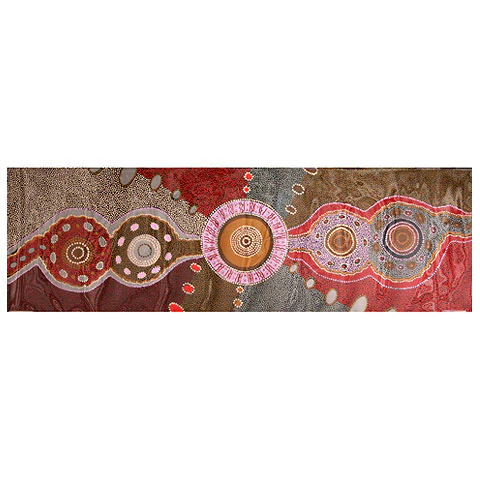
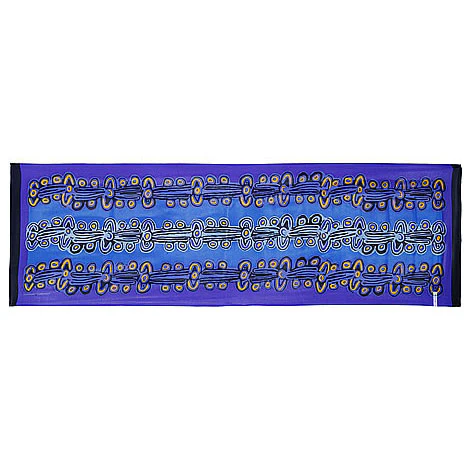
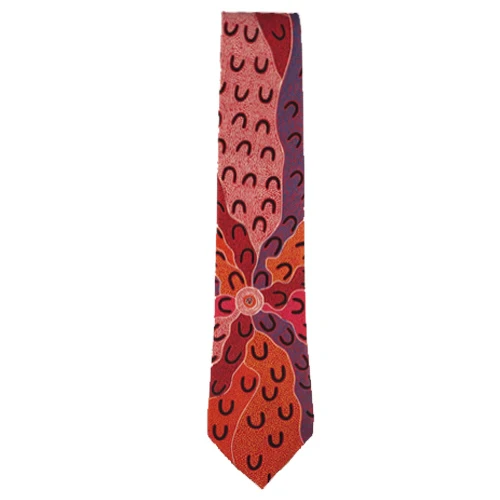
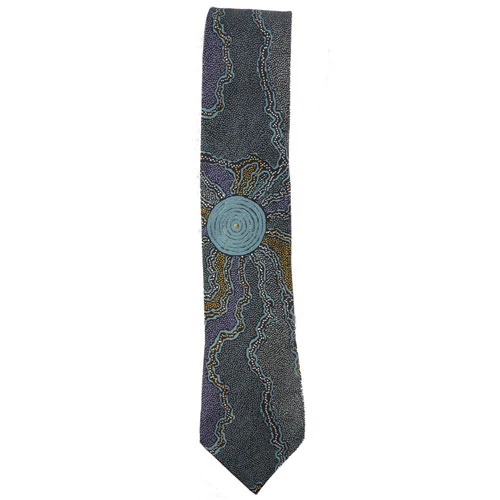
This is a teaching painting, describing a dry season in Damien’s homeland, Mount Liebig, in the Northern Territory. It illustrates aspects of landscape and culture that was told to Damien by his great-grandparents. Women sit with children collecting bush potatoes (the red shapes at the top of the painting) and are preparing for inma (ceremony). One man, wati, sits down with his waru (spear). Controlled burnings are taking place as the spinifex is dry, and this means good fruits can grow. The small star-like symbols represent women’s body paint that the women paint on each other for inma. A dry creekbed runs through the painting (in red and white), and there are cracks in the claypans, dried rockholes (tjukula), and sandhills (tali).
This is a teaching painting, describing a dry season in Damien’s homeland, Mount Liebig, in the Northern Territory. It illustrates aspects of landscape and culture that was told to Damien by his great-grandparents. Women sit with children collecting bush potatoes (the red shapes at the top of the painting) and are preparing for inma (ceremony). One man, wati, sits down with his waru (spear). Controlled burnings are taking place as the spinifex is dry, and this means good fruits can grow. The small star-like symbols represent women’s body paint that the women paint on each other for inma. A dry creekbed runs through the painting (in red and white), and there are cracks in the claypans, dried rockholes (tjukula), and sandhills (tali).
Description
Organic Cotton Scarf-DYM931
This is a teaching painting, describing a dry season in Damien’s homeland, Mount Liebig, in the Northern Territory. It illustrates aspects of landscape and culture that was told to Damien by his great-grandparents. Women sit with children collecting bush potatoes (the red shapes at the top of the painting) and are preparing for inma (ceremony). One man, wati, sits down with his waru (spear). Controlled burnings are taking place as the spinifex is dry, and this means good fruits can grow. The small star-like symbols represent women’s body paint that the women paint on each other for inma. A dry creekbed runs through the painting (in red and white), and there are cracks in the claypans, dried rockholes (tjukula), and sandhills (tali).
This is a teaching painting, describing a dry season in Damien’s homeland, Mount Liebig, in the Northern Territory. It illustrates aspects of landscape and culture that was told to Damien by his great-grandparents. Women sit with children collecting bush potatoes (the red shapes at the top of the painting) and are preparing for inma (ceremony). One man, wati, sits down with his waru (spear). Controlled burnings are taking place as the spinifex is dry, and this means good fruits can grow. The small star-like symbols represent women’s body paint that the women paint on each other for inma. A dry creekbed runs through the painting (in red and white), and there are cracks in the claypans, dried rockholes (tjukula), and sandhills (tali).